 The International Society of Ethnobiology is a global network of individuals and organizations working to preserve vital links between human societies and the natural world. The ISE was founded at the First International Congress of Ethnobiology in Belém, Brazil, in 1988, where more than 600 people from 35 countries and 16 Indigenous organizations became our first members. This Congress was one of the first opportunities for researchers and Indigenous and local community members to come together to discuss a common strategy to stop the rapid deterioration of the planet’s biological and cultural diversity. Our founding members, spearheaded our commitment to the idea of maintaining an “ethical space” at our Congresses, where divergent perspectives are welcomed and even encouraged. It is our belief that moving out of our comfort zones and listening to different perspectives is important to protect the earth’s biocultural diversity. Since 1988, the ISE has become the meeting place for all stewards of biocultural diversity and the idea of maintaining that ethical space runs through each of the ISE programs, which are as unique as our membership is diverse. We invite you to join our community and to support the Society’s work by donating to one of our programs.
As a 501(c)3 scientific and educational association we rely on your support to continue our activities and core programs—the Darrell Posey Fellowship Program, the Global Coalition for Biocultural Diversity, the Ethics Program, and our international Congresses.
The ISE’s major source of funding is coming to an end in 2014. This year-end campaign is your chance to ensure that the ISE can continue to offer all of its programs in the coming years.
Yes, I want to help the ISE in their pursuit of protecting and preserving biocultural diversity!
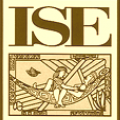
Where the ISE logo came from

The ISE logo was designed on a wood block in 1986 by artist Joubert Pantanêro from Maranhão. He based the artwork on Darrell Posey’s explanation of what ethnobiology meant, and the importance of interactions between humans and their environment, especially within indigenous societies. We believe it was intended to depict a healing ceremony. The somewhat simple representation of nature, in the plants and bird that are visible, was appropriate for the style of wood carving. Prints were made of the wood carving and used in fliers, posters and programs for the First International Congress of Ethnobiology—at which the ISE was founded—while the original artwork itself was on display at the Congress. The design was later adopted by the Society as its official logo.